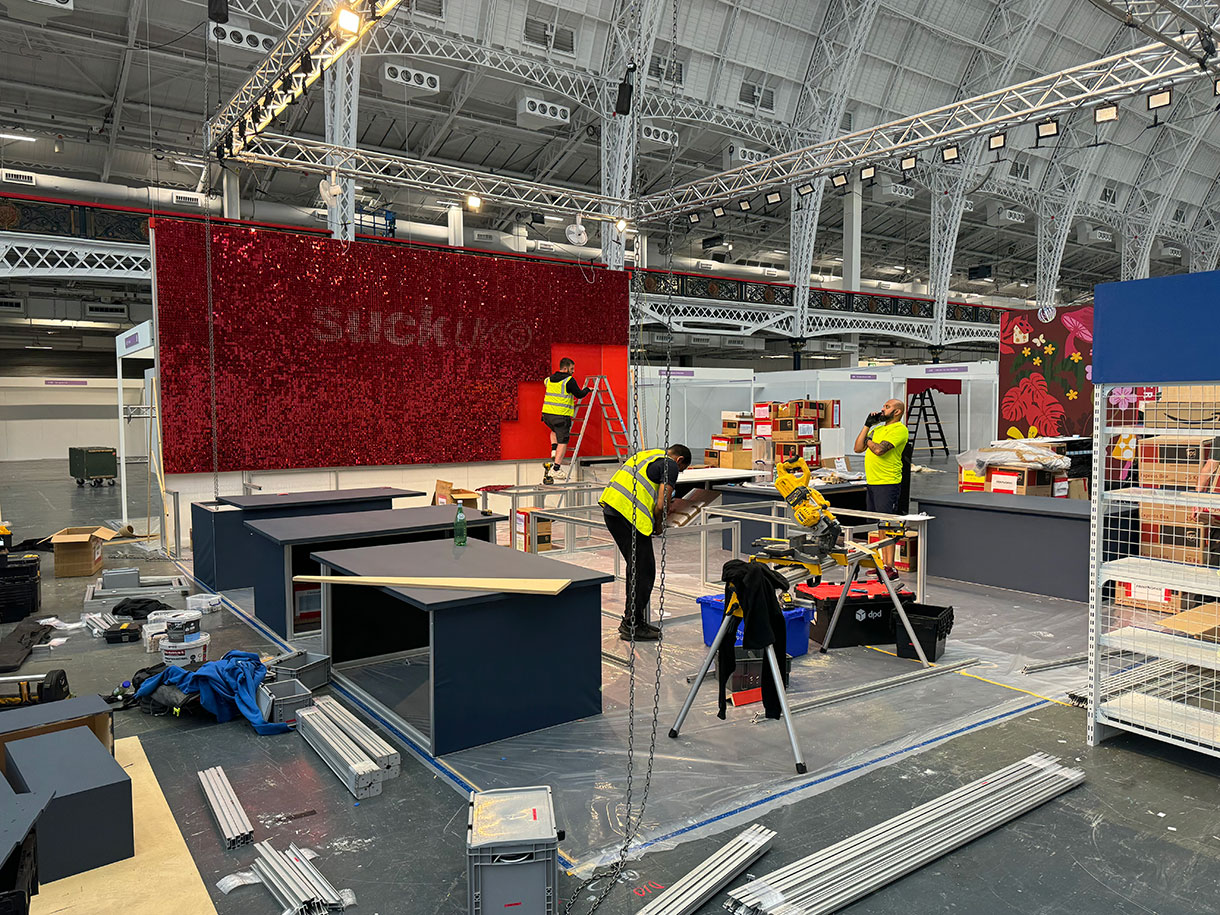
One of the biggest decisions exhibition managers face isn’t about colour schemes or messaging—it’s about stand architecture. Should you invest in a modular system that offers flexibility and value, or commission a fully custom-built stand that reflects your unique brand?
The answer isn’t one-size-fits-all. It depends on your budget, exhibition frequency, brand positioning, and long-term strategy.
This guide breaks down both approaches, compares their advantages and drawbacks, and helps you determine which solution aligns with your business goals. We’ll also reveal how modern modular tension fabric systems have blurred the lines, offering custom-quality aesthetics with modular flexibility.
What Are Modular Exhibition Stands?
Definition & Characteristics
Modular exhibition stands are built from prefabricated, reusable components designed to connect together in various configurations. Think of them like sophisticated building blocks—panels, frames, connectors, and integrated systems that assemble and reassemble countless ways.
Key characteristics:
- Prefabricated components with standardised connectors
- Reusable across multiple exhibitions with minimal modification
- Quick assembly at venues (typically 1-2 days)
- Scalable to different booth sizes (6m x 3m, 6m x 6m, larger islands)
- Modular design systems from providers like Pinnacle Creative integrate tension fabric, lighting, shelving, and AV
Modern modular systems—particularly those using tension fabric technology—achieve design quality that rivals custom builds while maintaining flexibility and cost-efficiency.
How Modular Tension Fabric Systems Work
Tension fabric systems represent the evolution of modular exhibition design. Rather than heavy frames and rigid walls, these systems stretch premium fabrics over lightweight aluminum frames, creating:
- Clean, seamless visual surfaces
- Integrated lighting (front and back-lit options)
- Acoustic properties for quieter booths
- Lightweight construction (easier transport and installation)
- Stunning, custom-looking finishes
What Are Custom/Bespoke Exhibition Stands?
Definition & Characteristics
Custom (or bespoke) exhibition stands are entirely unique structures designed and built from scratch specifically for your brand, requirements, and chosen venue.
Key characteristics:
- One-of-a-kind design tailored to your specifications
- Built specifically for a particular show (though can sometimes be adapted)
- Full creative freedom in materials, dimensions, and brand expression
- Longer lead times for design and build (4-6+ months)
- Higher costs reflecting bespoke design and craftsmanship
- Post-show options: can be dismantled, stored, or repurposed
Custom stands are often used by major brands, for landmark events, or when exhibition presence is critical to annual strategy.
Modular vs Custom: Head-to-Head Comparison
Advantages of Modular Exhibition Stands
Cost Efficiency Across Multiple Shows
The primary advantage of modular stands is cost per exhibition. If you attend four shows per year:
Custom stand scenario:
- Annual investment: £30,000–£400,000 (multiple bespoke builds)
- Cost per show: £15,000–£100,000
Modular stand scenario:
- Initial investment: £10,000–£40,000
- Annual reconfiguration and updates: £3,000–£8,000 per show
- Total annual investment: £22,000–£52,000
- Cost per show: £5,500–£13,000
Over three years, modular systems deliver 60-70% cost savings compared to commissioning new custom stands for each event.
Flexibility & Scalability
Modular systems adapt to any venue requirement:
- Shrink from 6m x 6m to 6m x 3m without purchasing new components
- Add meeting areas to smaller footprints
- Reconfigure layouts based on product or staffing changes
- Adapt to venue constraints (pillar locations, electrical access)
This flexibility is invaluable when space availability varies year to year or when you’re testing different exhibition venues.
Environmental Responsibility
In 2026, sustainability matters to your customers and your brand. Modular stands:
- Are reused dozens of times before replacement
- Reduce waste compared to single-use custom builds
- Are typically manufactured using sustainable materials
- Generate lower carbon footprints across their lifecycle
This appeals to environmentally conscious audiences and reflects your corporate values.
Faster Turnaround & Implementation
Modular stands:
- Deploy in weeks (not months)
- Can be configured quickly as circumstances change
- Allow last-minute modifications without expensive redesign
- Reduce project risk from long development timelines
Proven Performance & Design
Established modular system providers have tested designs across hundreds of installations. You benefit from:
- Proven structural integrity
- Lighting and acoustics optimised through real-world use
- Design trends validated across industries
- Best practices embedded in the system
Advantages of Custom/Bespoke Exhibition Stands
Complete Creative Control
Custom stands deliver exactly what you envision:
- Unique architectural features impossible with modular systems
- Completely original branding integration
- Bespoke materials (special finishes, heritage materials, unique textures)
- Fully tailored to your product or service presentation
- Memorable, showstopping presence
For major brands launching landmark products or establishing premium positioning, custom stands communicate investment and exclusivity.
Maximum Visual Impact & Differentiation
In crowded exhibition halls, custom stands stand out:
- Competitors can’t replicate your design
- Creates “wow factor” that drives footfall
- Photographs beautifully for PR and social media
- Establishes brand dominance at the show
Tailored Functionality
Custom builds accommodate highly specific requirements:
- Unique technology integrations
- Specialised demonstration areas
- Bespoke meeting rooms or VIP zones
- Custom product display solutions impossible with standard modular components
Prestigious Brand Statement
A striking custom stand signals investment and commitment. If your audience expects premium positioning (luxury goods, professional services, corporate prestige), a bespoke build reinforces that message.
Cost Comparison: Real-World Scenarios
Scenario 1: Multi-Show Exhibitor (4 shows/year)
Company: Mid-size software firm targeting exhibitions across UK and Europe
Modular Approach:
- Initial investment: £15,000 (6m x 6m tension fabric system with AV integration)
- Annual reconfiguration: £2,000/show x 4 = £8,000
- Storage and maintenance: £2,000/year
- Total Year 1 cost: £25,000
- Total 3-year cost: £58,000
Custom Approach:
- New stand for each show: £25,000 x 4 = £100,000
- Total Year 1 cost: £100,000
- Total 3-year cost: £300,000
Winner: Modular saves £242,000 over three years.
Scenario 2: Single High-Stakes Show
Company: Enterprise software vendor launching at industry’s largest annual conference
Modular Approach:
- Stand investment: £20,000
- Installatyion costs and custom elements: £8,000
- Total cost: £28,000 (plus ongoing value for future shows)
Custom Approach:
- Bespoke design and build: £40,000–£80,000
- Installation and staffing: £3,000–£5,000
- Total cost: £43,000–£85,000 (limited reuse value)
Winner: Custom justified only if brand differentiation is worth the premium and stand won’t be reused.
Scenario 3: Sustainability-Focused Brand
Company: ESG-conscious B2B company attending 6 shows annually
Modular Approach (Tension Fabric System):
- Initial investment: £18,000
- Annual cost: £6,000/year (reconfiguration, transport, minor updates)
- 3-year cost: £36,000
- Carbon footprint: ~2 tonnes CO2 (amortised across 18 show deployments)
Custom Approach (6 single-use stands):
- Annual cost: £80,000–£120,000
- 3-year cost: £240,000–£360,000
- Carbon footprint: ~12 tonnes CO2 (6 new stands, disposal or storage)
Winner: Modular saves dramatically on cost and environmental impact.
When to Choose Modular Exhibition Stands
Choose modular if you:
- Attend multiple exhibitions per year (3+)
- Need cost predictability and control
- Value flexibility and adaptability across different venues
- Want lower environmental impact
- Prefer faster deployment and shorter lead times
- Require easy customisation and updates between shows
- Have limited storage space (modular systems stack efficiently)
- Want proven, reliable design with embedded best practices
- Are budget-conscious but won’t compromise on quality
Ideal for: Mid-to-large companies with active exhibition strategies across multiple events.
When to Choose Custom/Bespoke Exhibition Stands
Choose custom if you:
- Attend one or two flagship shows annually
- Need complete creative uniqueness and differentiation
- Have highly specific functional requirements impossible with standard systems
- Are launching a major product or brand initiative
- Want maximum visual impact to justify premium positioning
- Have significant budget allocation for exhibition presence
- Require bespoke materials, finishes, or technology integration
- View the stand as a long-term asset (reuse across multiple venues or years)
- Need to make a statement about brand prestige and investment
Ideal for: Premium brands, major product launches, flagship industry events, companies where exhibition ROI justifies substantial investment.
How Pinnacle Creative’s Modular Tension Fabric Systems Bridge the Gap
Here’s where the distinction becomes blurred: modern modular systems, particularly tension fabric solutions, deliver custom-quality aesthetics with modular economics.
Pinnacle Creative’s modular tension fabric systems combine:
- Design customisation (bespoke graphics, colour, layout within the modular framework)
- Visual premium (clean, professional, contemporary aesthetics rivalling custom builds)
- Reusable components (amortise investment across 5, 10, or more shows)
- Quick deployment (installation in days, not weeks)
- Flexible scaling (expand or contract within the same system)
- Integrated technology (lighting, AV, lead capture integrated from the start)
The result? You achieve 90% of the visual impact of a custom stand at 40% of the cost, with the flexibility to adapt and reuse.
For most mid-to-large UK exhibitors, this represents the optimal balance between cost, flexibility, and visual impact.
Making Your Decision: A Checklist
Ask yourself these questions:
- How many exhibitions will I attend in the next three years?
- 1-2 shows → Custom may be justified
- 3+ shows → Modular delivers better ROI
- Is my budget fixed or variable?
- Fixed → Modular provides predictability
- Flexible → Custom may be viable
- How much creative control do I need?
- Complete uniqueness essential → Custom
- Professional quality within parameters → Modular
- How important is environmental responsibility?
- High priority → Modular wins
- Secondary consideration → Either option works
- What’s my primary exhibition objective?
- Establish premium positioning → Custom
- Generate leads cost-effectively → Modular
- Do I need rapid deployment?
- Yes, shows are booked quickly → Modular
- No, long lead time acceptable → Custom
Conclusion
The modular vs custom decision isn’t about one being universally “better.” It’s about alignment with your business strategy, budget, and exhibition frequency.
For most UK and European exhibitors, modular exhibition stands—particularly modern tension fabric systems—deliver exceptional value. They offer professional, contemporary design; flexibility across venues; cost control; and environmental responsibility. And when properly designed, they create the visual impact that drives footfall and engagement.
However, if you’re a premium brand attending a single flagship show where creative differentiation is paramount, a custom stand’s investment may be justified by the strategic impact.
The key? Partner with experienced contractors who understand both approaches and can honestly recommend what suits your needs—not what generates the highest margin.
Ready to explore modular solutions for your next exhibition? Pinnacle Creative specialises in tension fabric systems that deliver custom aesthetics with modular flexibility. Our team has guided hundreds of UK companies through this exact decision.
Get your free 3D stand visualisation. See modular options tailored to your brand, venue, and objectives—before you commit. Request your free visualisation today and discover what’s possible.